Every teacher lugs 2 jobs. One is evident: teach the curriculum. The other is quieter, usually larger, and just as vital: maintain youngsters safe. Child protection training isn't a management hoop, it's the ability that aids staff notification threat early, respond lawfully and morally, and file problems in a manner that protects the kid and the professional. Demands shift year by year as legislations evolve, reporting limits tighten or clarify, and on the internet injuries expand. If you work in an institution, early youth solution, OSHC, sporting activity, or tutoring, 2025 brings a couple of functional updates worth comprehending before the following term begins.
What has actually altered for 2025
The fundamentals stay: your obligation of treatment, your obligatory coverage responsibilities, and the demand to act upon sensible grounds. What feels various in 2025 is the expectation that training covers electronically mediated damage with the exact same roughness as physical or face‑to‑face abuse. This consists of brushing on messaging applications, coercive control that splashes right into on-line areas, and the distribution of self‑generated photos among youths. Many divisions and regulators have included specific understanding outcomes tied to electronic indicators and personnel borders on social platforms.
The competency CHCPRT025 Identify and report youngsters and youngsters at risk continues to anchor a big share of accredited programs. Service providers have updated study and analysis jobs to include facility family members regulation contexts, converging impairment and safety requirements, and multi‑agency responses. A number of territories require a refresher cycle of 12 to 24 months, and the Department of Education child protection training in several regions now includes more rigorous evaluation of paperwork skills instead of just understanding checks.
If you completed a child protection course greater than 2 years earlier, anticipate a stronger concentrate on sensible decision‑making. Training courses currently ask you to differentiate between what belongs in an event record, what beings in a wellbeing plan, and what should be phoned via to legal solutions immediately. The void in between understanding and competent activity has actually narrowed, which is good for kids and reassuring for staff.
The core expertise: CHCPRT025, discussed in ordinary terms
I have educated thousands of instructors with the CHCPRT025 course. The best sessions are not around memorising phrases, they have to do with constructing judgement. CHCPRT025 Identify and record kids and youngsters in jeopardy requires you to show that you can recognise indications of abuse or disregard, reply to disclosures, follow your organisation's plans, and satisfy lawful coverage commitments. It also requires you to maintain expert borders and recognize the cultural and contextual factors that impact danger and safety.
In method, that means you must be able to do 3 things under stress. Initially, notification subtle patterns, like a child that continually shows up late, hungry, and hypervigilant on Mondays, which may point to forget or residential physical violence over the weekend. Second, navigate a disclosure without leading concerns or guarantees you can not maintain. Third, file objectively and make a report according to your state or area's demands, even if your line manager is missing and the day is chaotic.
A great CHCPRT025 training program makes you exercise this, not just talk about it. I look for programs that include circumstance role‑plays, method note‑taking that gets examined, and evaluation that asks you to map regional thresholds for coverage. On the internet distribution can do this well if it combines self‑paced concept with online evaluation or a durable simulation. Numerous carriers currently provide a CHCPRT025 online training course with interactive branching situations, which is far more effective than an easy slide deck.
Who requires training, and exactly how often
Mandatory child protection training isn't just for instructors. In the majority of jurisdictions, anyone who works or volunteers in child‑related setups must finish child protection awareness training at induction and rejuvenate regularly. This consists of early childhood educators, discovering support, informal relief educators, OSHC personnel, trainee coaches, institution therapists, and admin or facilities staff that have where to take child protection awareness training regular child call. If you manage pre‑service teachers, they must also recognize the coverage pathway appropriate to the institution, not simply their university.
Frequency varies by employer and regulator. A common pattern is a full program every three years with annual refreshers concentrated on new threats or policy updates. Department of Education child protection training often includes required yearly components, with supplementary workshops for roles like principals, trainee health and wellbeing leaders, and kid security officers. If your setup runs under the National High Quality Structure, your service's policy will define refresher course intervals that straighten with threat. High‑turnover setups or programs with intricate demands might train more often since neighborhood understanding rots faster.
If you hold a child protection certification from 2022 or earlier, inspect whether your company needs the CHCPRT025 certification specifically. Some have moved from older systems to CHCPRT025 training so that discovering proof matches present certification. Others accept comparable training if it maps to the exact same results. Maintain the precise title and conclusion day accessible; auditors and licensing police officers request for specific details.
What top quality training looks like
Not all child protection courses are equivalent. The most effective programs prevent 2 catches: helpful‑sounding but obscure advice, and lists that neglect the messy realities of classrooms and families. Real knowing rests in between policy and technique, and it sticks when the instances feel like the children you really teach.
Here is what often tends to separate solid child protection training programs from the featureless ones:
- Clear administrative mapping. The training course names the appropriate legislation, reporting limits, and contact channels for your state or area, and it updates these promptly. If the instructor ducks inquiries about what number to call or what form to complete, that's a red flag. Practice based analysis. You reach practice a disclosure discussion, document truths without viewpoint, and complete a mock report that gets feedback. Expertise checks alone seldom change behaviour. Coverage of electronic harm. The training course shows how grooming might look inside game conversation, how browbeating escalates on private messaging, and just how to take care of self‑generated sex-related imagery ethically and legally. Cultural security and addition. Support needs to move past slogans. It needs to deal with how to acknowledge injury when cultural practices, impairment, or family court orders complicate the picture, and exactly how to prevent predisposition while still acting decisively. Supervision and debrief. Effective programs integrate in reflective technique. Not every issue becomes a record, and making a decision not to report takes as much care as deciding to report. Debrief models help team remain grounded and consistent.
A note on distribution modes. Child protection online training can be exceptional for reach and uniformity, particularly for alleviation team or rural teams. Blended alternatives that match a CHCPRT025 online course with a real-time workshop or training telephone call typically attain the most effective transfer to practice. Fully in‑person sessions radiate for role‑play and team preparation, though they can be more challenging to set up for huge services.
Reasonable grounds and the myth of certainty
New instructors frequently await certainty that never gets here. The regulation does not ask you to prove damage definite. It asks you to act on sensible grounds. In everyday work, affordable grounds look like a pattern of signs or a legitimate disclosure that makes you think a youngster is at risk. It may be a swelling in an uncommon location paired with a vague description, chronic disregard indications integrated with caregiver child protection awareness training material abuse, or a direct statement from the youngster, even if they later recant.
Reasonable premises are not gossip, ethical judgments, or stereotypes. They are concrete monitorings, dates, flags from advancing records, and statements in the youngster's very own words. If your work environment has a Youngster Safe Team or marked youngster security police officer, utilize them as an assuming partner, however do not allow assessment ended up being avoidance. When thresholds are satisfied, you report.
One practical idea that aids in the heat of the moment: compose what you see and hear, not what you think. As opposed to "moms and dad showed up drunk," record "strong scent of alcohol on breath at 8:25 am, slurred speech, unstable walking, kid holding parent's forearm to walk." Instead of "youngster was scared," compose "kid flinched when I elevated my hand to aim at the white boards, after that moved 2 seats away."
Handling disclosures without causing harm
Disclosures frequently occur at bothersome times, because kids select moments that feel safe to them, not to your timetable. One of my colleagues got a disclosure at the class door during afternoon pick‑up, with other parents in earshot. She got low on her knees so she was at eye degree, used calm voice, and stated, "I'm listening. We can step inside to talk." She maintained the promise little and true. Later, her notes were so clear that statutory services might act the same day.
There are a couple of concepts that work throughout ages and setups. You do not guarantee privacy. You recognize the child's guts. You avoid leading concerns that may infect evidence. You comfort them that it's not their fault. You prioritise immediate security if the supposed harm is urgent. And you videotape the specific words used by the kid. Your child protection training program must offer you a manuscript that really feels all-natural, and it needs to challenge you to adapt it to your style.
The tough part is managing your very own response. Anger, shock, and protectiveness are normal, but your function is to hold consistent and make the system benefit the child. Experienced personnel practice neutral language in advance. A short, truthful line like, "You've done the right thing telling me. I need to get aid to keep you secure," does more excellent than any type of pep talk.
Documentation that stands under scrutiny
Good notes can be checked out by people you will certainly never ever satisfy: caseworkers, investigatives, lawyers, interstate service navigators. Create as if your record will be watched in court. That doesn't suggest cool or medical, it implies accurate and complete.
Include dates, times, precise quotes, observed injuries, and any kind of action you took. Keep viewpoint out, or label it plainly as professional judgment with proof attached. Keep your document safe under your organisation's policy. Don't keep copies in individual e-mail or on your phone. If you post to a student management system, make certain the appropriate personal privacy flags are established so only authorised staff can access it.
The biggest avoidable error I see is delay. Team wait up until completion of the day and information blur. If the circumstance permits, write the child's precise words promptly after the discussion, after that transfer them to the official document. An additional preventable mistake is sharing information in casual networks. A fast debrief in the staffroom can unintentionally breach discretion. Adhere to the path laid out in your division of education child protection training, and maintain informal chatter to zero.
Working with family members while meeting legal duties
Not all problems call for an instant record to statutory solutions. Some sit in that space where early assistance and household collaboration can protect against escalation. Your policy must define what belongs where. A missed out on lunch or late pickup, on its own, welcomes a well-being conversation and sensible assistance. A persistent pattern incorporated with various other signs lifts the worry to a reportable level.
Families deserve regard, and lots of appreciate honest, compassionate interaction. The art remains in picking the appropriate minute and setting, and in not tipping off an affirmed criminal in such a way that raises danger. When a matter has been reported, you normally do not inform the household before authorities encourage. If you are not sure, ask the coverage line throughout the telephone call. When a matter does not meet the threshold for a report, be clear about what you observed, what the child stated, and what sustains you can offer or refer to. Stay clear of blame. Focus on the child's demands and the college's task of care.
In facility household law situations, validate that has adult responsibility and what orders exist prior to sharing information. Duplicates of orders should be kept data and reviewed frequently. Errors below can position a youngster in jeopardy or damages the college's reliability in future guarding actions.
The role of leaders and the society that maintains youngsters safe
Individual training aids, but youngsters are safeguarded by cultures, not simply certifications. Principals, directors, and planners set the tone. They choose whether team feel safe to raise concerns early, whether documentation systems work, and whether training is dealt with as a tick‑box or a specialist discipline.
A mature culture appears like this. Induction includes a child protection recognition training component on day one, not week 6. Alleviation personnel obtain a quick‑access card or electronic note with the reporting path and crucial calls. Team meetings include short safeguarding segments that reflect on actual technique, not just policy. Leaders model exactly how to make tough phone calls and back personnel when reports attract criticism. Outside partners, like youngster campaigning for centres and youth services, are known by name, not just by logo.
Leaders also see workload. When a college experiences a collection of high‑risk cases, personnel take in trauma. Without structured debrief, high quality falls and burnout rises. Construct in supervision sessions where team can process complicated instances with a person skilled. It makes the following report better, and it keeps excellent individuals in the job.
Choosing the best program for your role
An instructor in a large high school, an educator in a family day care, and a trainer in an after‑school program deal with different threats, timetables, and reporting lines. That indicates your child protection training program must match your context. If you work with under‑fives, try to find a child protection course for childcare that covers nonverbal indications, injuries that may present differently in young children, and collaboration with moms and dads that are physically existing at pickup daily. If you operate in additional, demand protection of peer‑to‑peer damage, image‑based misuse, and the grey zone between technique issues and safety and security concerns.
Accreditation issues. If your employer needs the CHCPRT025 certification, verify that the supplier assesses versus the device, not simply a generic workshop. Ask exactly how the evaluation is carried out and what evidence you will obtain. An appropriate child protection training certificate should list the unit code, the carrier's RTO number if relevant, the date, and the outcome. For department of education child protection training, make certain your completion posts correctly to the central human resources or compliance system. A notepad in a workdesk cabinet assists no one throughout an audit.
Online, combined, or face to face
Each setting has trade‑offs. On the internet modules get to large groups and enable adaptable timing, which aids when you need to onboard mid‑term hires. They are strong for law updates and standard indications. Their weakness is deepness of method unless the layout is interactive. A CHCPRT025 online training course with scenario branching, voice recordings, and assessed documentation can overcome that gap.
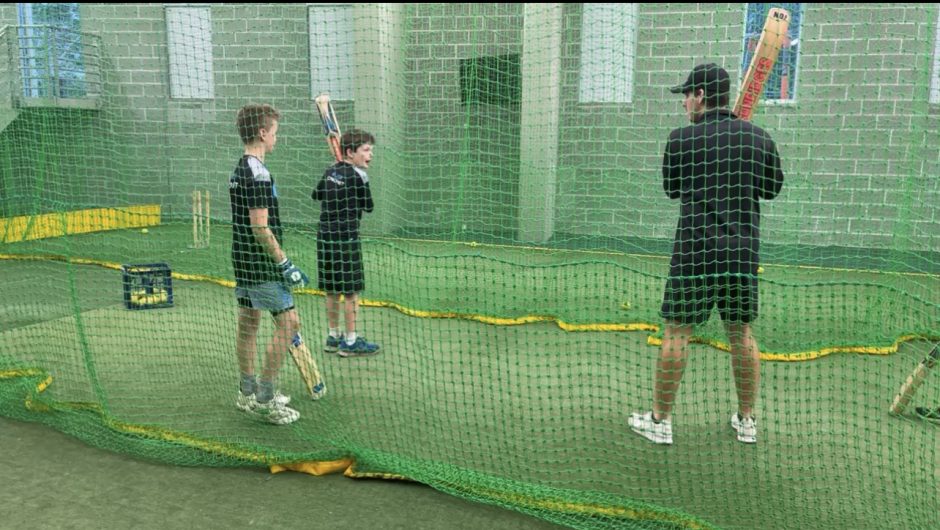
Face to‑face workshops construct team cohesion and allow you exercise disclosures securely. They are optimal for solutions that intend to run through actual, local predicaments, like how to manage the school entrance when a moms and dad subject to an order attempts pickup. Their weakness is logistical: getting everybody in the very same area, covering relief prices, and repeating sessions for new staff.
Blended techniques attempt to obtain the best of both. Pre‑work covers law and plan, after that the live session concentrates on role‑plays, note‑writing, and planning for regional dangers. In my experience, this framework improves retention and self-confidence, and it shortens time away from classrooms.
The electronic frontier: what 2025 expects you to know
Ten years earlier, child protection training barely responded to online injury. That's changed. In 2025, you are anticipated to comprehend how misuse and grooming move across systems, how to detect behaviour modifications that point to coercion online, and how college devices and learning platforms can supply signals.
Watch for brand-new patterns. A formerly engaged pupil who starts making use of personal privacy tools obsessively might not be a budding cybersecurity professional; they could be hiding communication with a risky grownup. Trainees that all of a sudden spend breaks in bathrooms with phones can be responding to consistent messaging. A young person that comes to be very distressed when asked to turn over a gadget could be dealing with hazards. These are not proofs. They are signs to look closer, inspect electronic citizenship documents, and consult your kid safety lead.
Your policy should specify limits in between staff and pupils online. This consists of direct messaging, adheres to on social systems, and using personal accounts for school communication. Even when objectives are excellent, obscured limits increase threat for everybody. Your child protection training course ought to spell out intense lines that keep both students and staff safe.
Intersection with various other structures: Kid Safe Standards and wellbeing
Many territories currently run under Youngster Safe Criteria that set the more comprehensive culture. Child protection training plugs into those criteria by furnishing team to act on the frontline. The criteria emphasise kid voice, equity, and continual enhancement. Practically, this means building basic, visible ways for kids to seek assistance, educating personnel to react, and bookkeeping method, not simply policy.
Safeguarding likewise intersects with psychological health and health and wellbeing programs. A pupil's anxiety or challenging behaviour could be an action to injury or recurring damage. Personnel trained only in behaviour administration may miss out on the underlying cause. The most effective groups coordinate, so trainee support, kid security policemans, and class educators share the appropriate details within privacy regulations and act with each other. A clear method avoids details silos that reduce help.
When the system really feels slow
You will certainly in some cases make a report and hear little back. Statutory systems triage cases based on risk and capacity, and the bar for activity can feel high. Do not take silence as a signal you were incorrect to report. Document the record, keep an eye on the kid, and intensify if brand-new details emerges. Keep your leader in the loop. Where suitable, engage global solutions like college nurses, counselors, and neighborhood family members support to boost security. Child protection is a system of numerous parts, not a single phone call.
If you think a youngster is in prompt threat, telephone call emergency situation solutions. That action rests outside the regular coverage paths, and it is appropriate when a child's safety and security goes to danger now, not tomorrow.
Quick referral: the fundamentals educators must have the ability to do after training
- Recognise signs of abuse and forget, including on-line grooming and peer harm, and act upon affordable premises without awaiting certainty. Respond to disclosures with calmness, non‑leading language, avoid guarantees of privacy, and prioritise immediate safety and security when needed. Document factually with dates, direct quotes, observed indicators, and actions taken, and store documents according to policy. Follow regional coverage pathways and thresholds, get in touch with the right authority, and escalate or speak with without delay. Maintain expert limits online and personally, and utilize guidance and debrief to endure judgment under pressure.
Making training stick across the year
The biggest difference in between a certification on paper and true capacity is technique. Build a schedule where child protection topics appear in tiny, regular dosages. Short refreshers on note‑taking, fast evaluations of a case study at a staff meeting, and five‑minute check‑ins on electronic danger before examination durations keep abilities active. For new or informal staff, develop a one‑page pathway card that details who to call, where to tape, and how to access policies. Maintain it upgraded when calls or systems change.
I have actually seen schools cut reporting time from hours to mins by introducing an easy triage method: teacher informs the child security lead, lead checks threshold with a quick consult, record is made, documentation filed, and the trainee is supported the exact same day. None of this removes your duty as a mandatory press reporter. It provides you a well‑lit course when a youngster informs you something hefty and time starts to relocate fast.
Final thoughts for 2025
The stakes are not abstract. A youngster who feels thought and protected at the appropriate minute can maintain attending school, maintain their friendships intact, and keep their trust in grownups. The abilities that make this feasible can be discovered, practiced, and freshened. If you haven't upgraded your child protection training since the last overhaul of your policy, book time this term. If you hold duty for a group, evaluation whether your mix of child protection programs covers CHCPRT025 where required, reaches all team, and includes the method components that change behaviour.
Certificates matter since they indicate conformity. Skills issues since it keeps children safe. Aim for both.